Fish & seafood
Salmon
An oily fish that is as good for your heart as it is high in protein. Here is its full nutrition and the recipes and guides on the site that feature it.
Nutrition facts
| Nutrient | Per 100g | Per 150g serving |
|---|---|---|
| Calories | 208 | 312 |
| Protein | 20 g | 30 g |
| Fat | 13 g | 19.5 g |
| Calcium | 9 mg | 13.5 mg |
| Potassium | 363 mg | 544.5 mg |
| Iron | 0.3 mg | 0.5 mg |
| Omega-3 | 2.3 g | 3.5 g |
| Vitamin B12 | 3.2 mcg | 4.8 mcg |
| Zinc | 0.4 mg | 0.6 mg |
Per 100 g. Values are approximate and vary by source.
Why salmon is good for you
Salmon is one of the best sources of omega-3 fatty acids, the healthy fats linked to heart and brain health and to lower inflammation. It is also rich in high-quality protein, making it a rare food that supports muscle and cardiovascular health at the same time.
It provides vitamin D, B12 and selenium, nutrients many people fall short on. Eating oily fish like salmon once or twice a week is one of the simplest ways to cover your omega-3 needs.
For more, explore our related guide.
How to eat it
Cooking methods
- Roast or bake
- Pan-sear the skin
- Grill or barbecue
- Poach gently
Meal ideas
- With rice and greens
- Flaked into salads
- In grain bowls
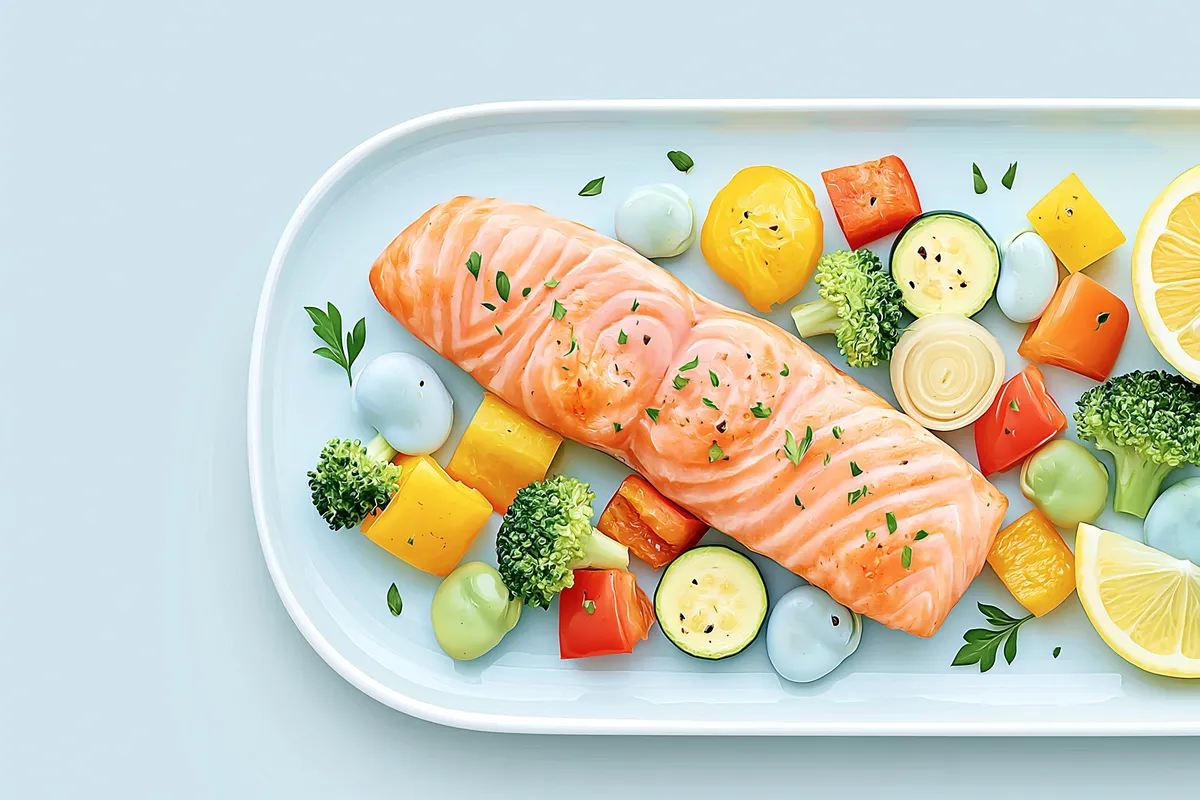
- With roasted vegetables
Recipes & ideas with salmon
Ways to put it to use across the site, from full recipes to guides and side-by-side comparisons.
Featured in 10 food lists
Salmon qualifies for these ranked guides on the site.
Frequently asked questions
How much protein is in salmon?
Salmon has around 20 g of protein per 100 g, or roughly 30 g in a 150 g serving.
How many calories are in salmon?
Around 208 calories per 100 g, or about 312 in a 150 g serving.
Is salmon good for building muscle?
Yes. With around 20 g of protein per 100 g, salmon supplies the amino acids muscles need to repair and grow, making it a useful food for building or maintaining muscle.
Is salmon high in omega-3?
Yes. Salmon is a good source of omega-3 fatty acids, the healthy fats linked to heart and brain health.